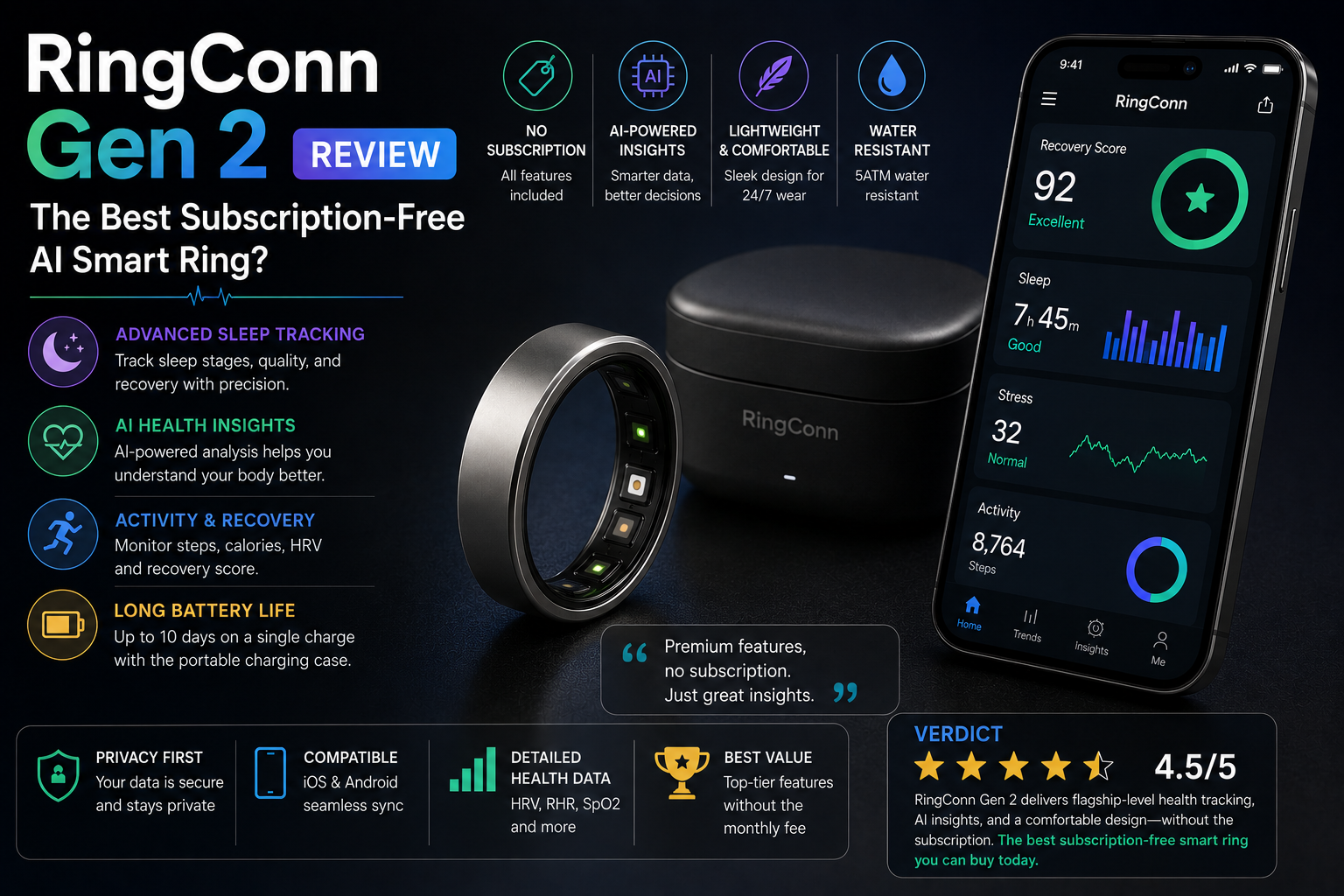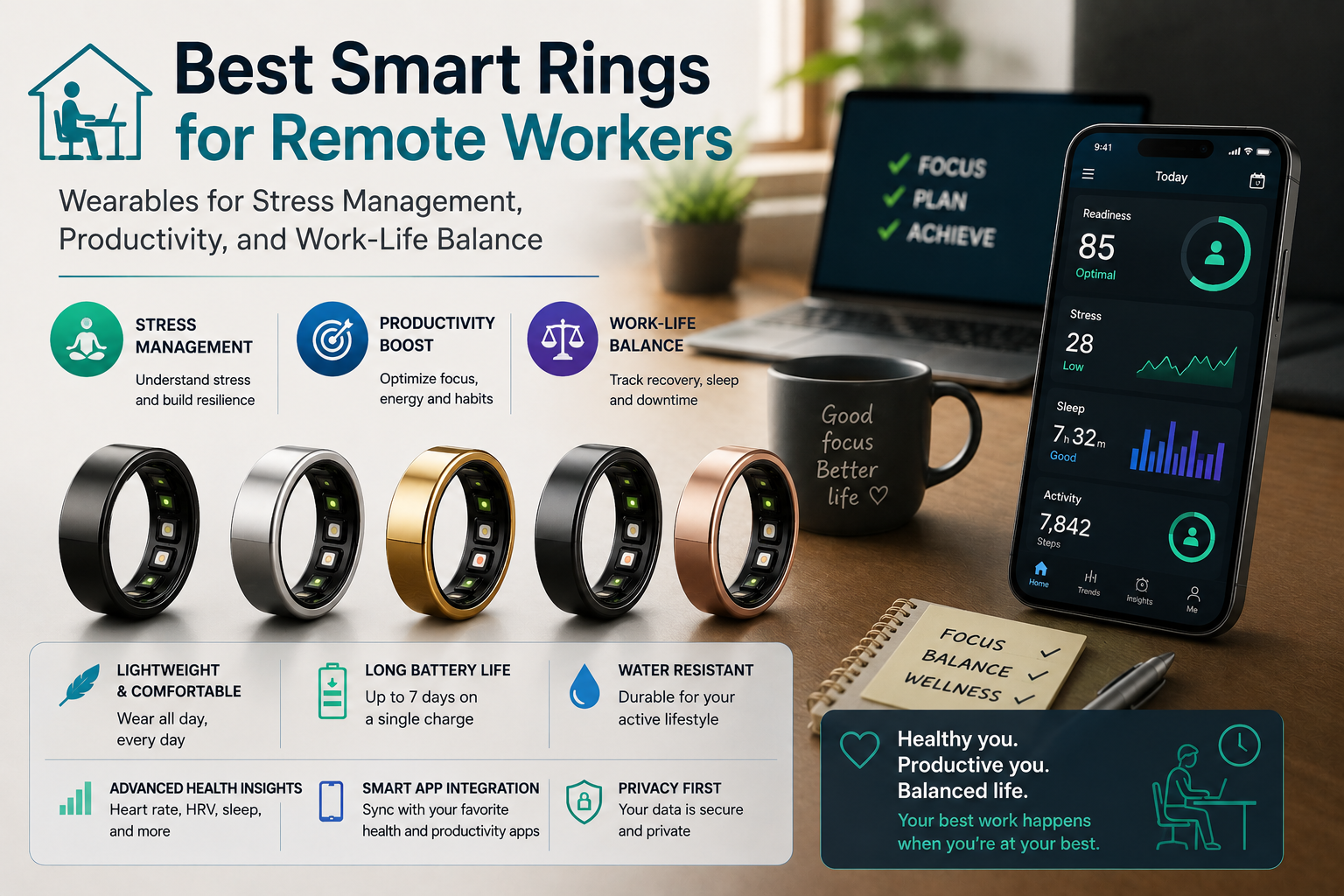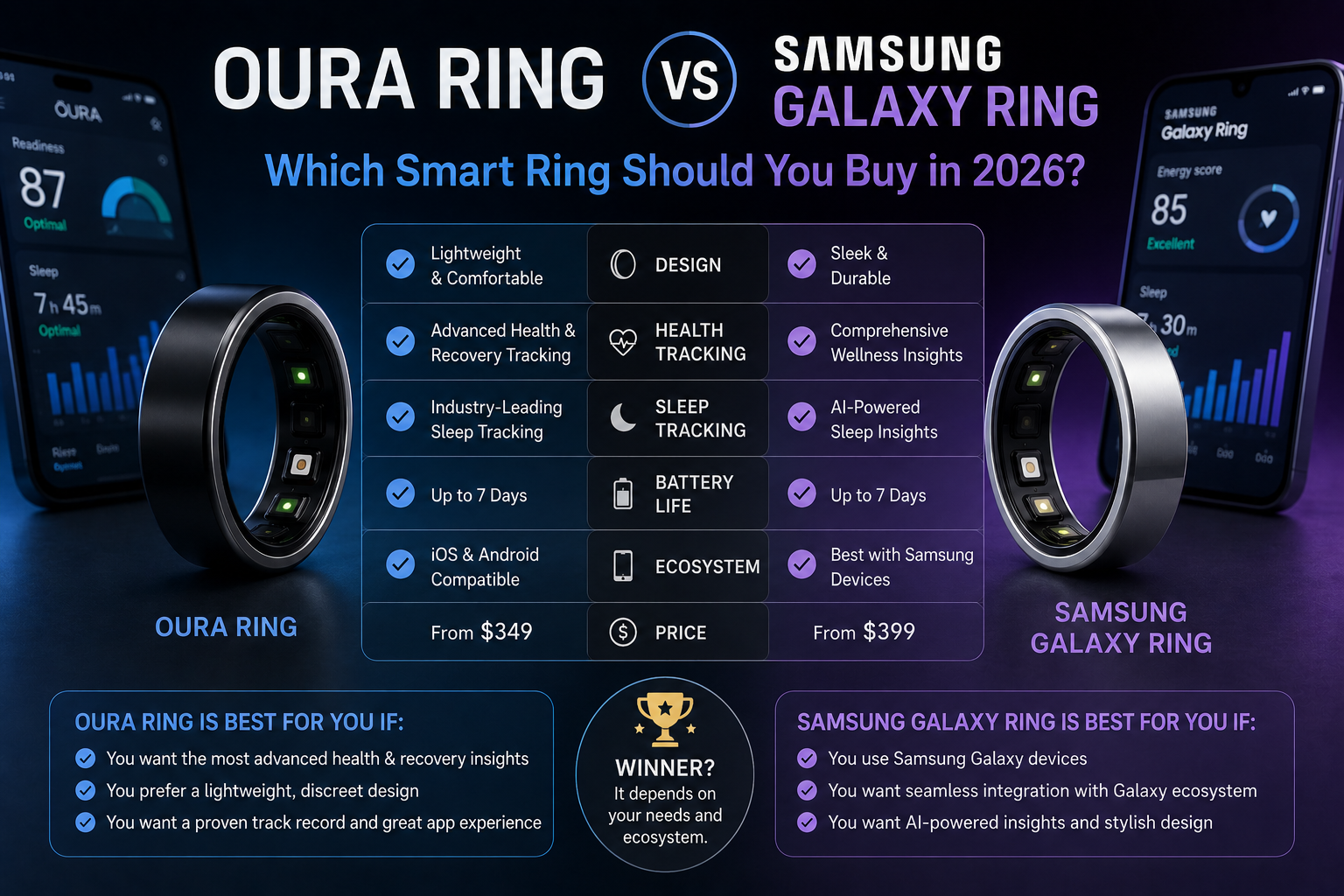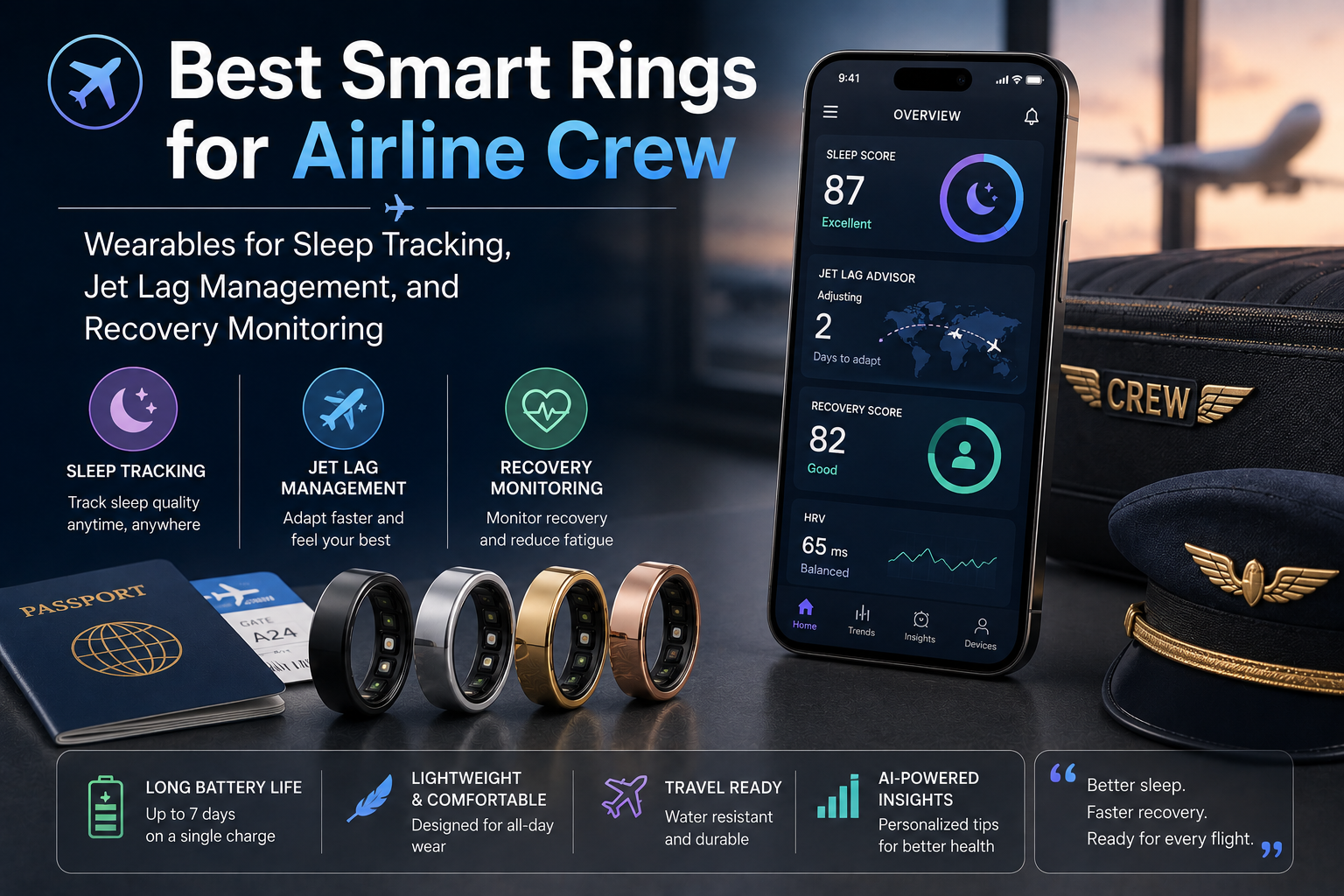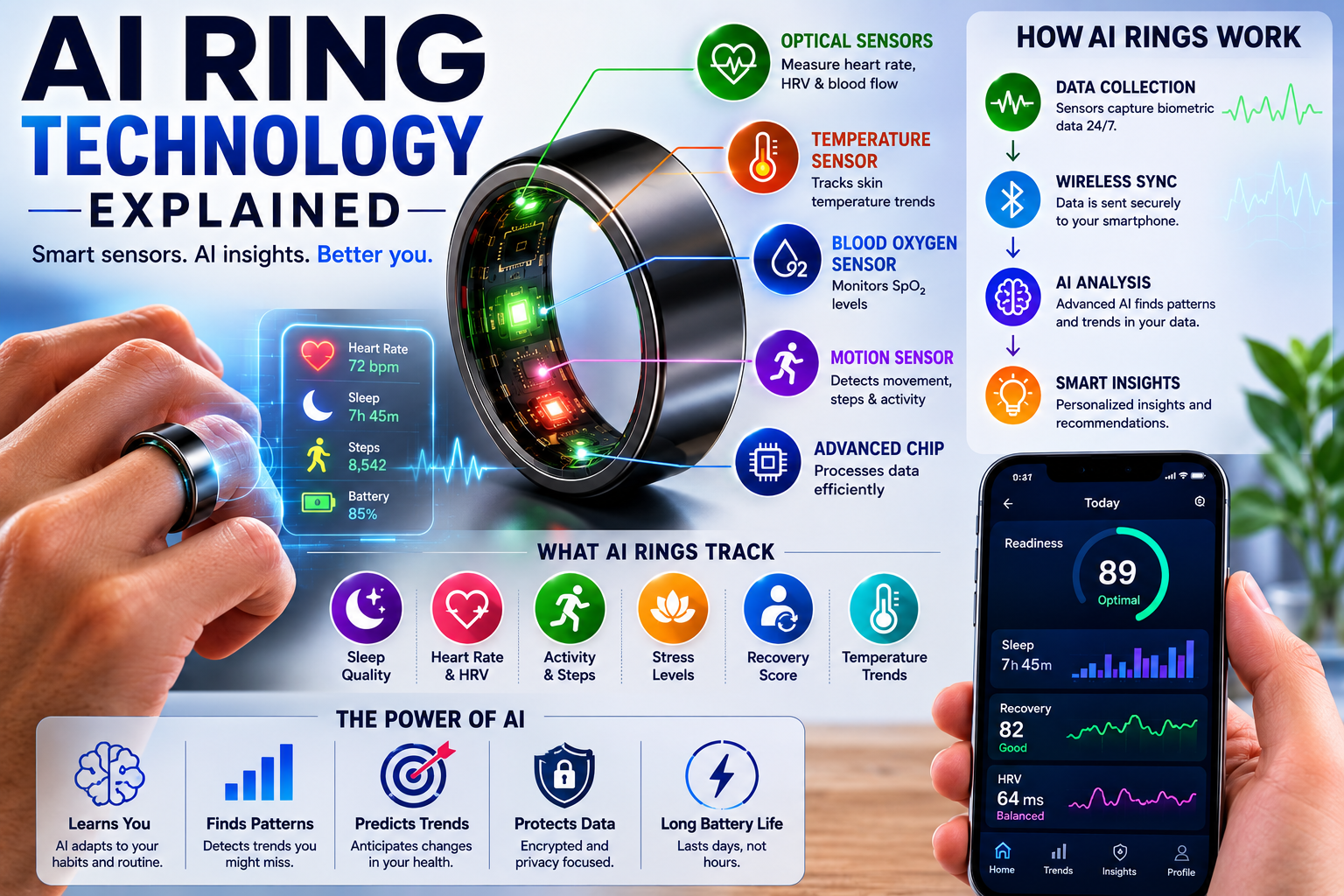
Artificial intelligence is transforming wearable technology, and AI Rings are emerging as one of the most innovative products in this rapidly growing market. These compact devices combine advanced sensors, wireless communication, miniaturized electronics, and machine learning algorithms to monitor health, sleep, activity, and wellness from a ring worn on your finger.
Although AI Rings appear simple from the outside, they contain sophisticated technology capable of collecting thousands of data points every day. The real power of these devices comes from artificial intelligence, which analyzes that data and converts it into meaningful insights that help users improve their health and daily habits.
In this guide, we’ll explain the technology behind AI Rings, how the various components work together, and why these small devices are becoming a major part of the future of wearable computing.
What Is AI Ring Technology?
AI Ring technology refers to the combination of wearable sensors, embedded computing, wireless connectivity, and artificial intelligence within a smart ring.
Unlike traditional fitness trackers that simply record data, AI Rings use machine learning to identify patterns, estimate recovery, detect changes in wellness, and generate personalized recommendations.
The technology is designed to operate continuously while remaining lightweight, comfortable, and unobtrusive.
Modern AI Rings can track:
- Heart rate
- Heart rate variability (HRV)
- Sleep quality
- Activity levels
- Recovery metrics
- Stress indicators
- Body temperature trends
- Blood oxygen levels (on some models)
All of this functionality is packed into a device that often weighs only a few grams.
The Hardware Inside an AI Ring
The foundation of AI Ring technology is its hardware.
Despite their small size, AI Rings contain several sophisticated components.
Optical Sensors
Optical sensors are responsible for measuring blood flow beneath the skin.
These sensors use tiny LEDs that shine light into the finger and photodetectors that measure reflected light.
Changes in blood flow allow the ring to calculate:
- Heart rate
- Heart rate variability
- Blood circulation trends
The finger is an excellent location for these measurements because it contains numerous blood vessels close to the skin surface.
Temperature Sensors
Many AI Rings include temperature sensors that monitor subtle changes in skin temperature.
Temperature trends can help estimate:
- Recovery status
- Stress responses
- Sleep quality
- Illness indicators
- Physiological changes
Rather than focusing on single readings, AI systems typically analyze long-term temperature patterns.
Accelerometers
Accelerometers detect motion and movement.
These sensors help track:
- Walking
- Running
- Exercise sessions
- Daily activity levels
- Sleep movement
The data collected contributes to activity tracking and sleep analysis.
Gyroscopes
Some AI Rings include gyroscopes that measure rotational movement.
When combined with accelerometers, they provide more detailed motion analysis and activity recognition.
Rechargeable Battery
Miniature lithium-ion batteries power the device.
Most AI Rings provide:
- Multiple days of battery life
- Fast charging
- Continuous monitoring
Battery efficiency is a critical engineering challenge because space inside the ring is extremely limited.
How AI Rings Collect Data
AI Rings continuously collect biometric and behavioral data while being worn.
This process generally follows four steps:
Step 1: Sensor Measurements
Sensors gather information from the wearer throughout the day and night.
Step 2: Signal Processing
The ring’s processor cleans and organizes raw sensor data.
Noise and interference are filtered out to improve accuracy.
Step 3: Data Transmission
Bluetooth Low Energy (BLE) transfers data to a smartphone app.
Step 4: AI Analysis
Machine learning algorithms analyze the collected information and generate insights.
The user receives understandable summaries rather than raw sensor readings.
Artificial Intelligence and Machine Learning
Artificial intelligence is what distinguishes AI Rings from traditional wearable devices.
Without AI, a smart ring would simply collect data.
AI allows the system to:
- Detect patterns
- Learn user habits
- Identify anomalies
- Predict trends
- Generate recommendations
Personalized Learning
Machine learning models adapt to each user over time.
For example, the system learns:
- Typical sleep schedules
- Normal heart rate patterns
- Activity habits
- Recovery behaviors
This personalization allows recommendations to become increasingly accurate.
Pattern Recognition
AI can identify relationships that may not be obvious to users.
Examples include:
- How sleep affects recovery
- How exercise influences resting heart rate
- How stress impacts sleep quality
By recognizing these connections, AI Rings help users understand their overall wellness more effectively.
Sleep Tracking Technology
Sleep monitoring is one of the most advanced applications of AI Ring technology.
AI Rings combine multiple data sources:
- Heart rate
- Heart rate variability
- Body temperature
- Movement patterns
- Breathing trends
Machine learning models estimate:
Light Sleep
The transition between wakefulness and deeper sleep.
Deep Sleep
The stage associated with physical restoration and recovery.
REM Sleep
The stage linked to dreaming and cognitive recovery.
Sleep Quality
Overall effectiveness and consistency of sleep.
The resulting sleep reports help users improve sleep habits and identify potential issues.
Recovery Tracking Technology
Recovery tracking has become a major reason people purchase AI Rings.
Recovery scores are typically generated using:
- Sleep quality
- Heart rate variability
- Resting heart rate
- Body temperature
- Recent activity levels
AI algorithms analyze these metrics to estimate how well the body has recovered from:
- Exercise
- Stress
- Travel
- Illness
- Daily physical demands
The goal is to help users balance activity and recovery more effectively.
Stress Monitoring Technology
Many AI Rings estimate stress levels through physiological measurements.
The system analyzes:
- Heart rate variability
- Resting heart rate
- Sleep disruptions
- Activity patterns
Changes in these signals may indicate increased stress levels.
Some AI Rings also provide suggestions such as:
- Rest periods
- Breathing exercises
- Sleep improvements
- Activity adjustments
These features help users become more aware of how stress affects overall wellness.
Wireless Connectivity
Most AI Rings rely on Bluetooth Low Energy technology.
BLE provides:
- Low power consumption
- Continuous synchronization
- Fast data transfers
- Smartphone compatibility
The ring communicates with a companion app that serves as the primary user interface.
The app displays:
- Health metrics
- Trends
- Reports
- Scores
- AI-generated insights
Cloud services may also be used for advanced processing and software updates.
Data Security and Privacy
Because AI Rings collect personal health information, security is a critical part of the technology.
Modern AI Ring platforms often include:
- Data encryption
- Secure cloud storage
- User authentication
- Privacy controls
- Data export options
Users should always review privacy policies and understand how their information is stored and processed.
Challenges of AI Ring Technology
Despite impressive advances, AI Rings still face several technical challenges.
Size Constraints
Engineers must fit sensors, batteries, processors, and antennas into a very small device.
Battery Limitations
Balancing battery life with advanced features remains difficult.
Sensor Accuracy
Factors such as ring fit, finger size, and movement can affect readings.
Data Interpretation
Even sophisticated AI models may occasionally misinterpret sensor data.
Technology continues to improve, but no wearable device is perfect.
The Future of AI Ring Technology
AI Ring technology is evolving rapidly.
Future developments may include:
- Continuous glucose monitoring
- Blood pressure estimation
- Hydration tracking
- Advanced stress detection
- Predictive health alerts
- AI health coaching
- Medical-grade monitoring
- Smart home integration
- Gesture-based device control
As sensors become smaller and artificial intelligence becomes more capable, AI Rings may become powerful personal wellness assistants that continuously help users optimize their health.
Final Thoughts
AI Ring technology combines advanced sensors, miniature electronics, wireless connectivity, and artificial intelligence to create one of the most sophisticated forms of wearable technology available today. By continuously collecting biometric data and analyzing it through machine learning algorithms, AI Rings provide valuable insights into sleep, recovery, activity, stress, and overall wellness.
While the technology continues to evolve, AI Rings already offer a compelling glimpse into the future of personal health monitoring. Their combination of comfort, convenience, and intelligent analysis makes them one of the most promising categories in the wearable technology industry.