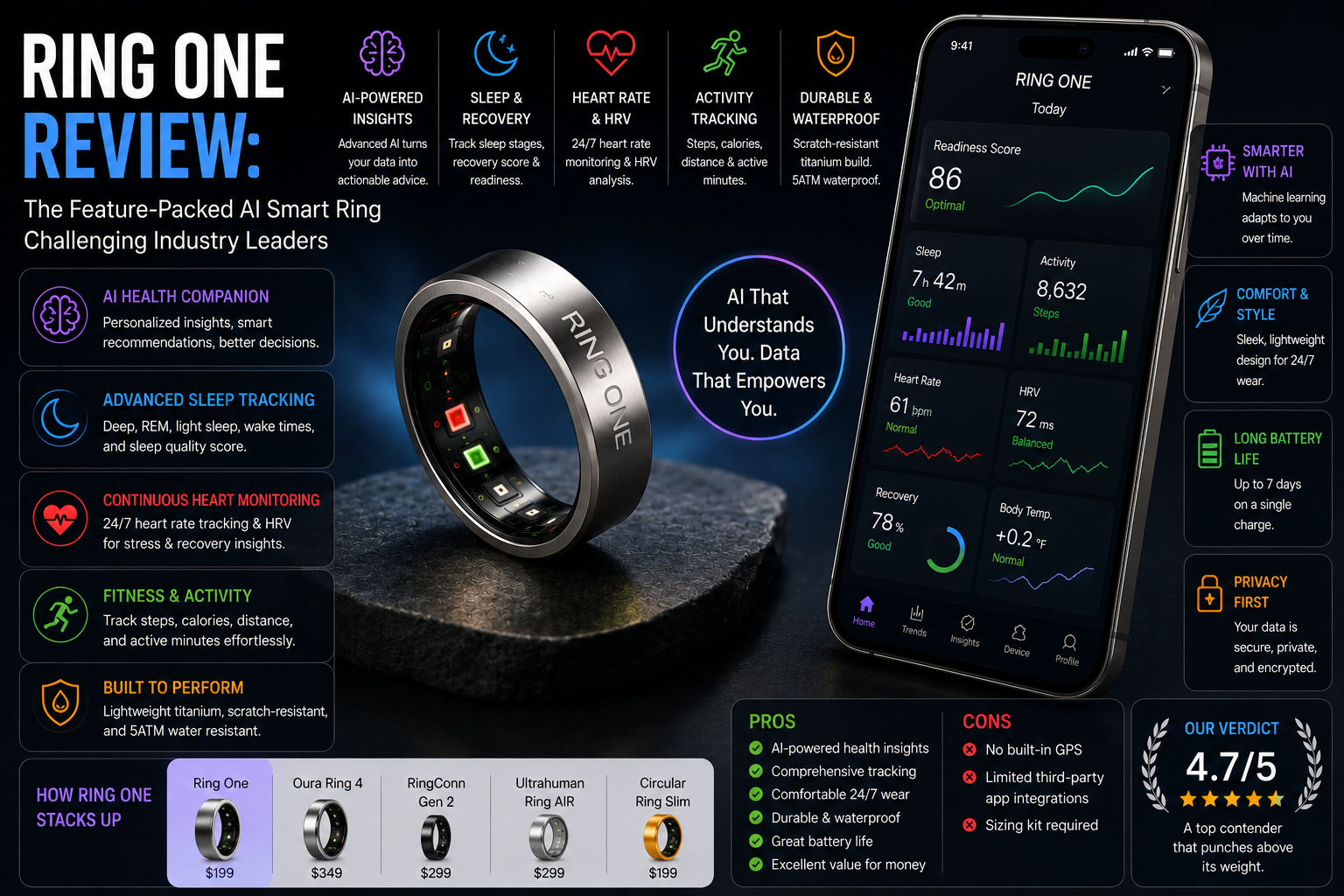
The Ring One has attracted significant attention in the smart ring industry by promising premium health-tracking capabilities, advanced biometric sensors, and AI-powered wellness insights at a competitive price. Designed to compete directly with established names such as Oura, Samsung, and RingConn, the Ring One aims to deliver a comprehensive health monitoring experience in a sleek and comfortable form factor.
With features ranging from sleep tracking and recovery analysis to cardiovascular monitoring and personalized wellness recommendations, the Ring One positions itself as a serious contender in the growing AI wearable market.
In this review, we’ll examine the Ring One’s features, AI capabilities, design, battery life, health-tracking performance, and overall value.
What Is the Ring One?
The Ring One is a smart ring that continuously monitors key health and wellness metrics throughout the day and night. Using multiple sensors and AI-driven analytics, it collects biometric data and transforms it into actionable health insights.
The ring is designed to help users better understand their sleep quality, recovery status, activity levels, stress patterns, and overall wellness while remaining comfortable enough for continuous wear.
Key Features
The Ring One offers an impressive list of wellness-tracking capabilities:
- Sleep monitoring
- Heart rate tracking
- Heart rate variability (HRV) analysis
- Blood oxygen monitoring
- Stress tracking
- Activity tracking
- Recovery monitoring
- Skin temperature tracking
- AI-powered health insights
- Readiness scoring
- Advanced cardiovascular monitoring
The goal is to provide a complete picture of physical recovery and overall wellness.
AI Capabilities
Artificial intelligence serves as the foundation of the Ring One experience.
The platform analyzes health data trends and generates personalized recommendations based on physiological patterns and lifestyle behaviors.
Examples of AI-powered insights include:
- Sleep optimization recommendations
- Recovery guidance
- Activity balancing suggestions
- Stress management advice
- Wellness trend reporting
- Readiness assessments
- Personalized health summaries
The more data the ring collects, the more tailored these recommendations become.
Health and Fitness Tracking
The Ring One continuously monitors several key health metrics.
Tracked data includes:
- Resting heart rate
- Continuous heart rate
- HRV
- Blood oxygen saturation
- Daily activity levels
- Recovery indicators
- Stress markers
- Temperature changes
- Cardiovascular trends
The platform focuses on helping users identify long-term wellness patterns rather than simply recording daily statistics.
Sleep Monitoring
Sleep tracking is one of the Ring One’s primary strengths.
The ring measures:
- Total sleep duration
- Deep sleep
- REM sleep
- Light sleep
- Sleep efficiency
- Sleep consistency
- Overnight heart rate
- Overnight HRV
Users receive detailed reports that help explain how sleep quality influences recovery and daily performance.
Recovery Tracking
Recovery monitoring is a major focus of the Ring One ecosystem.
The platform evaluates:
- Sleep quality
- HRV trends
- Resting heart rate
- Activity load
- Stress levels
- Recovery indicators
These insights help users determine when their body is ready for intense physical activity and when additional rest may be beneficial.
Cardiovascular Monitoring
One of the features that helped generate interest around the Ring One is its focus on cardiovascular health.
The platform tracks multiple physiological signals related to heart health and recovery.
Potential benefits include:
- Improved awareness of heart rate trends
- Better understanding of recovery status
- Identification of wellness changes over time
- Long-term health monitoring
Users interested in comprehensive wellness tracking may find these additional measurements valuable.
Stress Monitoring
The Ring One continuously analyzes physiological markers associated with stress.
Measurements may include:
- HRV fluctuations
- Heart rate patterns
- Recovery indicators
- Sleep quality metrics
The resulting insights can help users better manage daily stress and improve overall wellness.
Battery Life
Battery performance is competitive with many modern smart rings.
Most users can expect approximately 6 to 8 days of battery life depending on usage patterns and enabled features.
This allows for continuous tracking with relatively infrequent charging.
Design and Comfort
The Ring One is designed to be worn throughout the day and night.
Design highlights include:
- Lightweight construction
- Water resistance
- Durable materials
- Comfortable fit
- Minimalist appearance
- Multiple size options
The ring is intended to balance advanced technology with everyday wearability.
Mobile App Experience
The Ring One mobile app serves as the central dashboard for health monitoring.
Features include:
- Wellness reports
- Sleep analytics
- Recovery tracking
- Activity monitoring
- Stress analysis
- Historical trend reporting
- Personalized recommendations
The app focuses on presenting health information in a clear and understandable format.
Pricing
The Ring One is generally positioned as a value-oriented alternative to premium smart rings.
By offering a robust feature set at a competitive price, it appeals to users seeking advanced health tracking without paying top-tier prices.
This pricing strategy has helped the Ring One attract significant interest within the wearable technology community.
Pros and Cons
Pros
- Comprehensive health tracking
- Strong sleep monitoring
- AI-powered wellness insights
- Competitive pricing
- Recovery-focused analytics
- Good battery life
- Comfortable design
Cons
- Smaller ecosystem than Samsung
- Brand still establishing market presence
- Limited third-party integrations
- App experience may vary as the platform evolves
Who Should Buy the Ring One?
The Ring One is ideal for:
- Health-conscious individuals
- Fitness enthusiasts
- Recovery-focused athletes
- Budget-conscious buyers
- First-time smart ring users
- Users seeking AI-powered wellness tracking
Its broad feature set makes it appealing to a wide range of users.
Alternatives
Popular alternatives include:
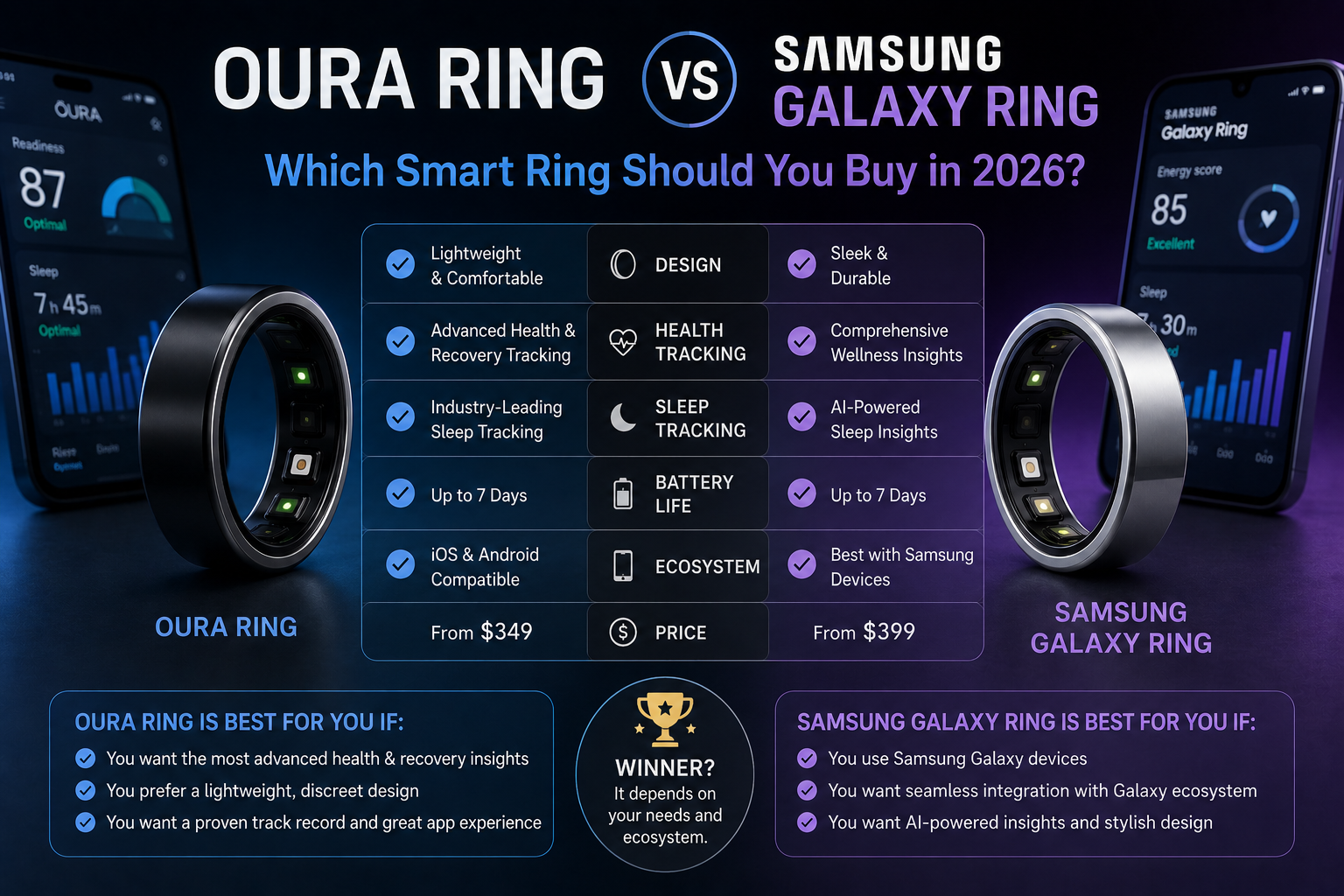
- Oura Ring 5
- Samsung Galaxy Ring
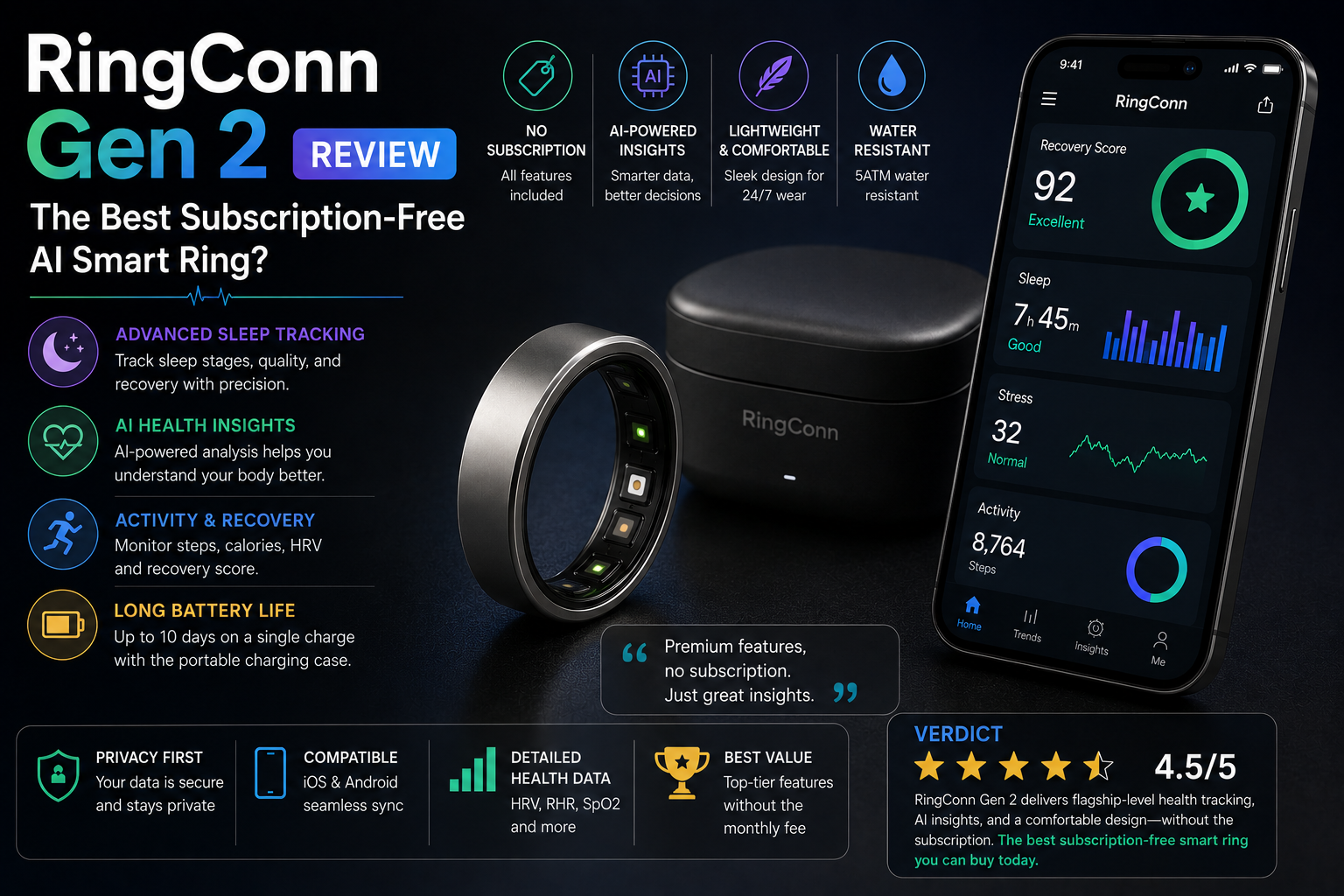
- RingConn Gen 2
- Ultrahuman Ring Air
- Amazfit Helio Ring
- Circular Ring 2
Each competitor offers different strengths in areas such as ecosystem support, coaching features, battery life, and health analytics.
Frequently Asked Questions
Does Ring One use AI?
Yes. The platform uses artificial intelligence to analyze biometric trends and generate personalized wellness recommendations.
Is Ring One good for sleep tracking?
Yes. Sleep monitoring is one of its core features and includes detailed sleep-stage analysis and recovery reporting.
How long does the battery last?
Most users can expect approximately 6 to 8 days of battery life depending on usage.
Can Ring One monitor stress?
Yes. The ring analyzes physiological indicators such as HRV and heart rate patterns to estimate stress levels.
Is Ring One waterproof?
The ring is designed to withstand everyday water exposure and normal fitness activities.
Final Verdict
The Ring One enters the smart ring market with an ambitious goal: providing premium health-tracking features and AI-powered insights at a competitive price. Its combination of sleep tracking, recovery analysis, cardiovascular monitoring, stress tracking, and personalized wellness recommendations makes it one of the most feature-rich emerging smart rings available.
While it still faces strong competition from more established brands, the Ring One demonstrates that innovation in the smart ring market is far from over. For users seeking comprehensive health tracking and AI-driven wellness insights without paying flagship prices, the Ring One is a compelling option worth considering.