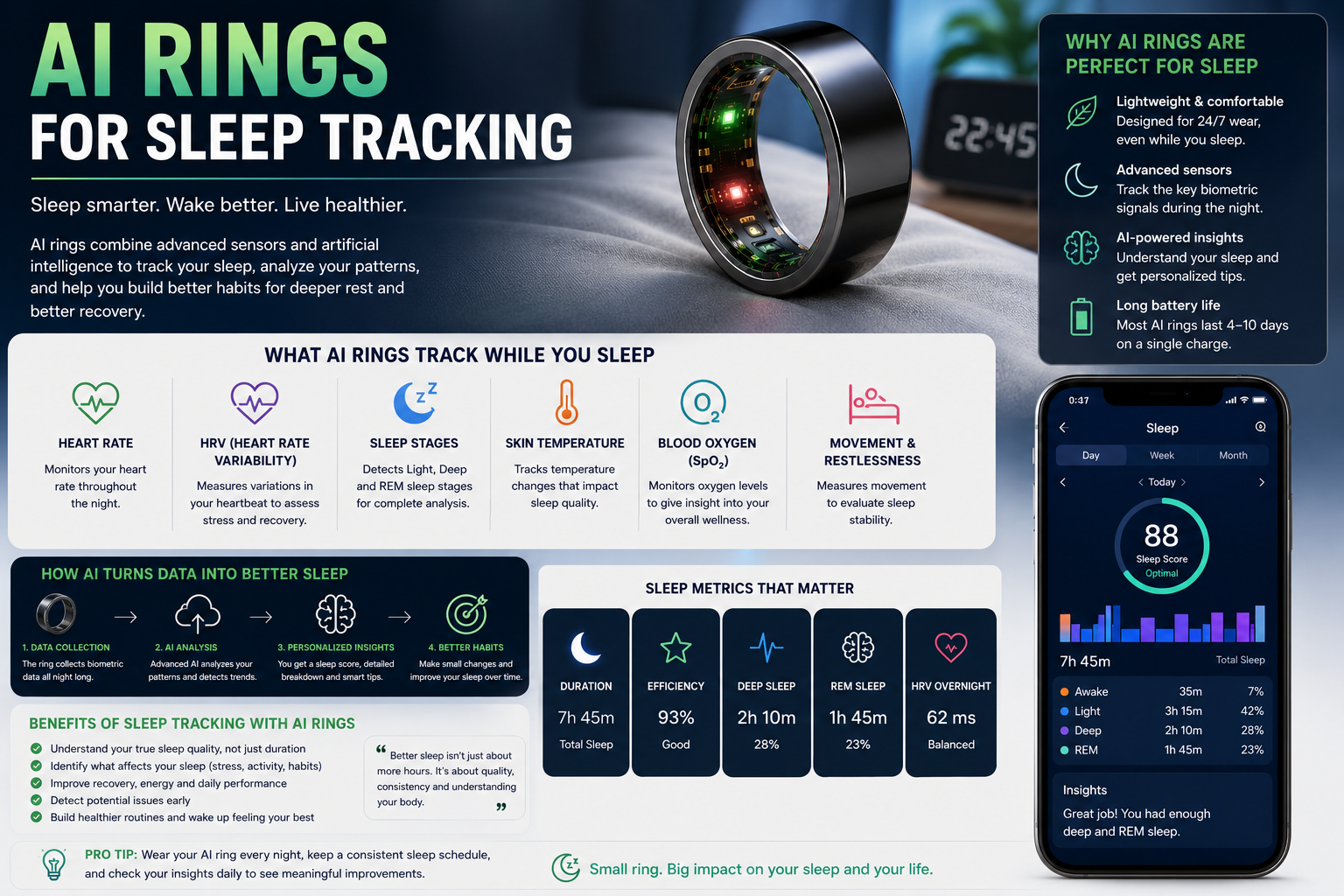
Sleep is one of the most important factors affecting overall health, recovery, mental performance, and daily energy levels. Yet many people struggle to understand whether they are getting enough quality sleep or what habits may be impacting their rest. This is where AI Rings have emerged as a powerful tool.
AI Rings are among the most advanced sleep-tracking wearables available today. By combining sophisticated sensors with artificial intelligence, these devices can monitor your sleep throughout the night and provide personalized insights to help you improve both sleep quality and recovery.
In this guide, we’ll explore how AI Rings track sleep, what metrics they measure, the benefits they offer, and whether they are worth considering for better sleep health.
Why Sleep Tracking Matters
Many people focus on the number of hours they spend in bed, but sleep quality is often just as important as sleep duration.
Poor sleep can affect:
- Energy levels
- Mental focus
- Mood
- Recovery from exercise
- Immune function
- Long-term health
Sleep tracking helps users understand what happens during the night and identify habits that may be helping or harming their sleep.
By monitoring sleep consistently, users can make informed adjustments that lead to better rest and improved overall wellness.
What Is an AI Ring?
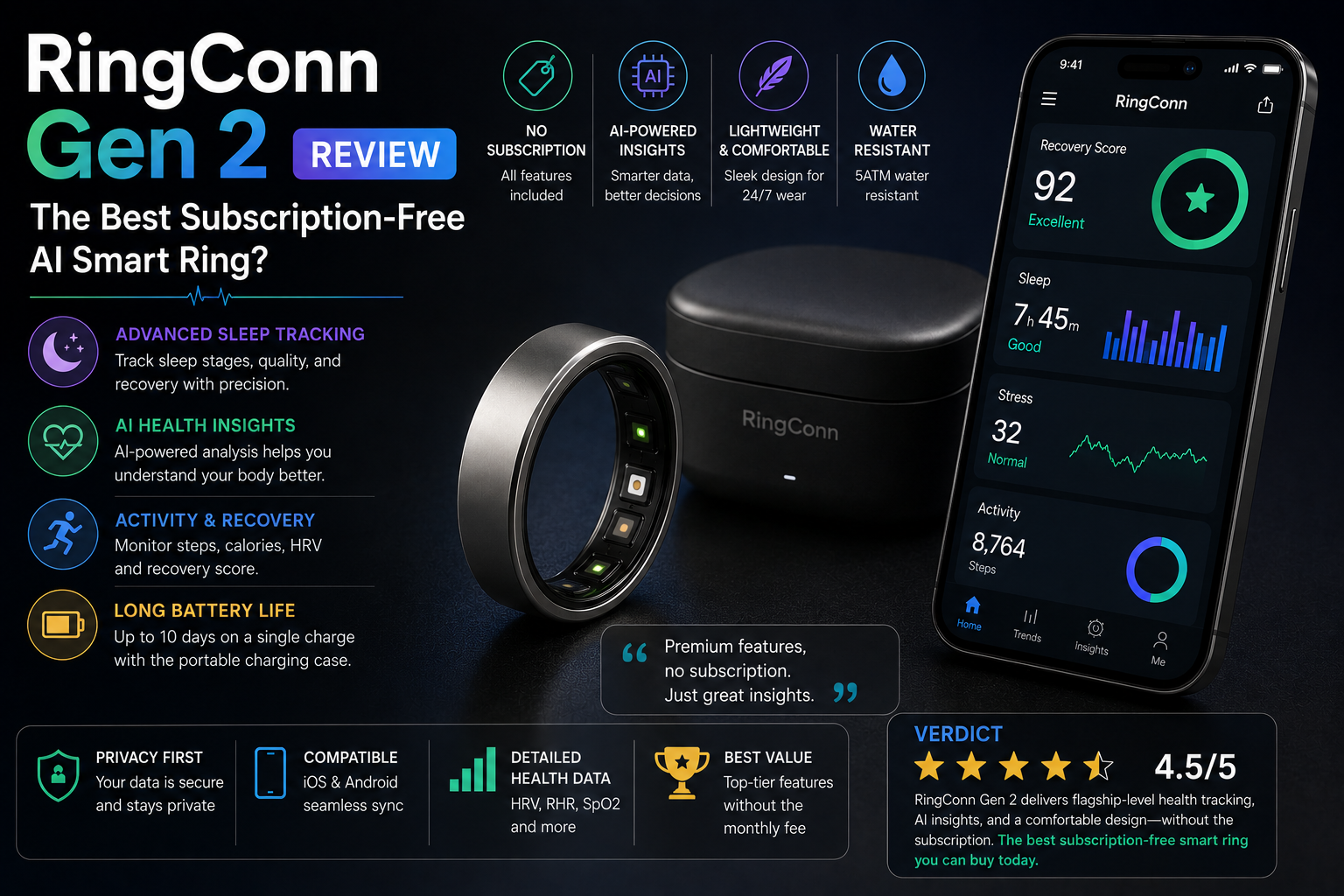
An AI Ring is a wearable smart ring equipped with sensors that collect biometric data from the finger. Artificial intelligence analyzes this data to provide insights into sleep, recovery, activity, stress, and overall wellness.
Unlike many traditional sleep trackers, AI Rings are designed for continuous wear and are lightweight enough to remain comfortable throughout the night.
Their discreet design and advanced monitoring capabilities have made them increasingly popular among people looking to optimize sleep.
Why AI Rings Are Well-Suited for Sleep Tracking
Several factors make AI Rings particularly effective for sleep monitoring.
Comfortable to Wear
Many people find smartwatches uncomfortable during sleep.
AI Rings are lightweight and compact, making them easier to wear overnight without causing discomfort.
Continuous Monitoring
Because users are more likely to wear a ring continuously, AI Rings can collect uninterrupted sleep data night after night.
Accurate Finger-Based Measurements
The finger contains numerous blood vessels close to the skin’s surface, making it an ideal location for collecting physiological signals such as heart rate and blood flow.
Long Battery Life
Most AI Rings can operate for several days on a single charge, reducing the likelihood of missing sleep data due to battery limitations.
How AI Rings Track Sleep
AI Rings use a combination of sensors and machine learning algorithms to estimate sleep patterns and sleep stages.
Heart Rate Monitoring
Optical sensors continuously measure heart rate during the night.
Changes in heart rate help the system understand:
- Sleep stages
- Recovery levels
- Sleep stability
- Overall wellness
Heart Rate Variability (HRV)
HRV measures variations between heartbeats.
Higher HRV is often associated with:
- Better recovery
- Lower stress
- Improved sleep quality
AI systems use HRV as an important indicator of overnight recovery.
Movement Detection
Built-in accelerometers monitor body movement throughout the night.
This helps identify:
- Restlessness
- Sleep interruptions
- Sleep onset
- Wake periods
Skin Temperature Monitoring
Many AI Rings track temperature changes while sleeping.
Temperature trends can reveal:
- Recovery status
- Illness indicators
- Changes in sleep quality
- Physiological stress responses
Blood Oxygen Monitoring
Some AI Rings also monitor blood oxygen saturation levels during sleep.
This can provide additional wellness insights and help identify unusual trends.
Understanding Sleep Stages
One of the most valuable features of AI Rings is sleep stage analysis.
AI algorithms estimate the amount of time spent in different stages of sleep.
Light Sleep
Light sleep serves as the transition between wakefulness and deeper sleep.
It accounts for a significant portion of total sleep time.
Deep Sleep
Deep sleep is the body’s most restorative stage.
Benefits include:
- Physical recovery
- Muscle repair
- Immune system support
- Hormonal regulation
REM Sleep
REM (Rapid Eye Movement) sleep is associated with:
- Dreaming
- Learning
- Memory consolidation
- Cognitive recovery
AI Rings help users understand whether they are receiving sufficient amounts of each stage.
Sleep Scores and Readiness Scores
Most AI Rings generate a daily sleep score.
This score typically considers:
- Total sleep duration
- Sleep efficiency
- Sleep consistency
- Sleep stage distribution
- Restfulness
- Physiological recovery
Many devices also generate readiness or recovery scores that estimate how prepared the body is for physical and mental activity.
These scores help users make more informed decisions about exercise, work demands, and recovery needs.
Personalized Sleep Insights
Artificial intelligence is what makes AI Rings particularly valuable.
Rather than simply displaying data, AI systems identify patterns and generate recommendations.
Examples include:
- Going to bed earlier
- Maintaining a consistent sleep schedule
- Reducing late-night activity
- Improving recovery habits
- Managing stress before bedtime
Over time, the system learns from your data and becomes increasingly personalized.
How AI Rings Help Improve Sleep
Tracking sleep alone does not automatically improve it.
The real value comes from understanding patterns and making adjustments.
AI Rings help users:
Identify Poor Sleep Habits
Users may discover that:
- Late meals affect sleep quality
- Alcohol disrupts recovery
- Irregular bedtimes reduce sleep efficiency
Build Consistent Routines
Sleep consistency is one of the strongest predictors of sleep quality.
AI Rings can help users establish healthier schedules.
Monitor Recovery
By understanding how sleep affects recovery, users can make smarter decisions about exercise and workload.
Detect Long-Term Trends
AI systems excel at identifying gradual changes that might otherwise go unnoticed.
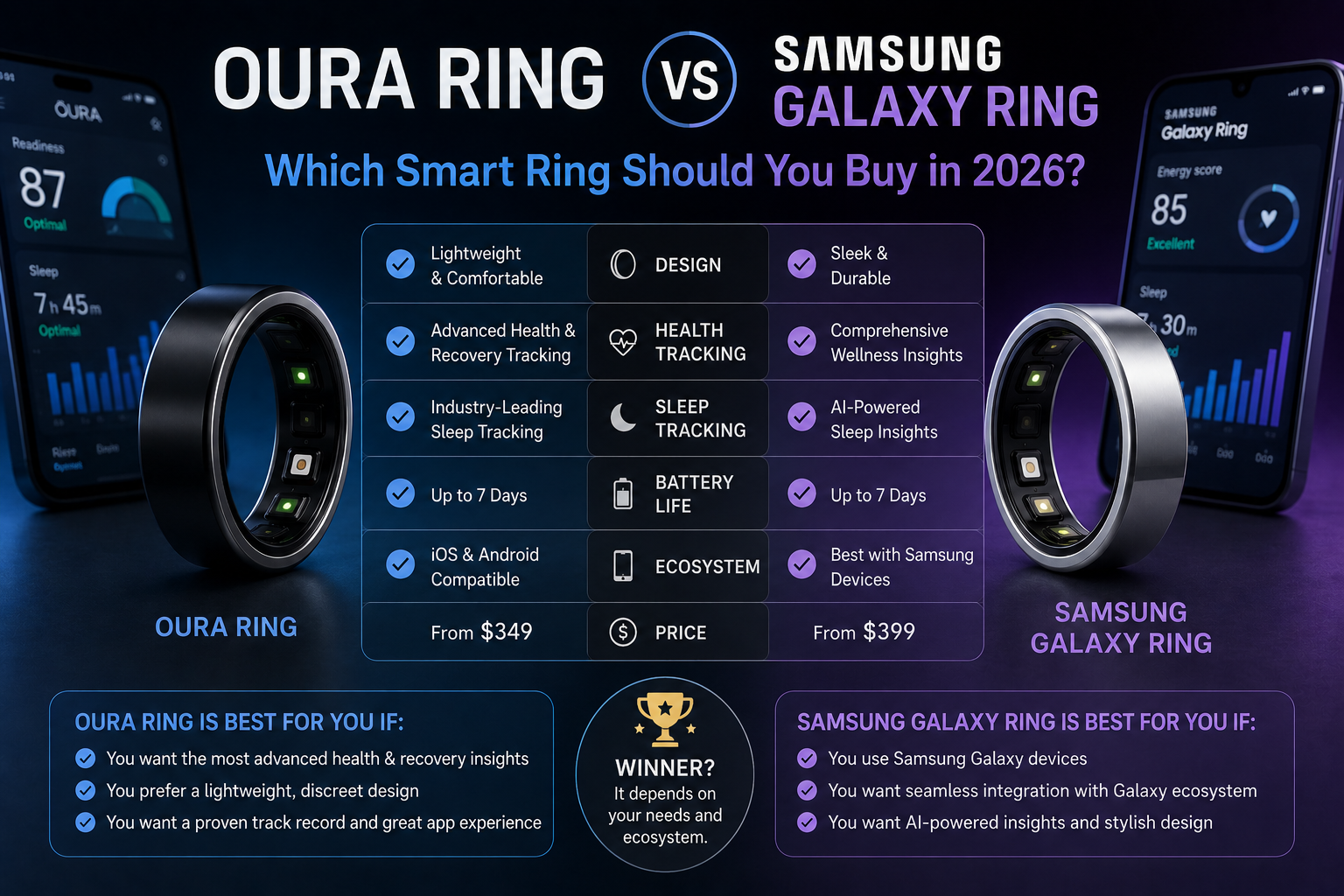
AI Rings vs Smartwatches for Sleep Tracking
Many people compare AI Rings with smartwatches when choosing a sleep tracker.
Advantages of AI Rings
- More comfortable during sleep
- Lightweight design
- Longer battery life
- Better suited for overnight wear
- Less distracting
Advantages of Smartwatches
- Larger displays
- Additional features
- Notifications
- GPS functionality
For users primarily interested in sleep monitoring, AI Rings often provide a more comfortable and focused experience.
Who Can Benefit from AI Ring Sleep Tracking?
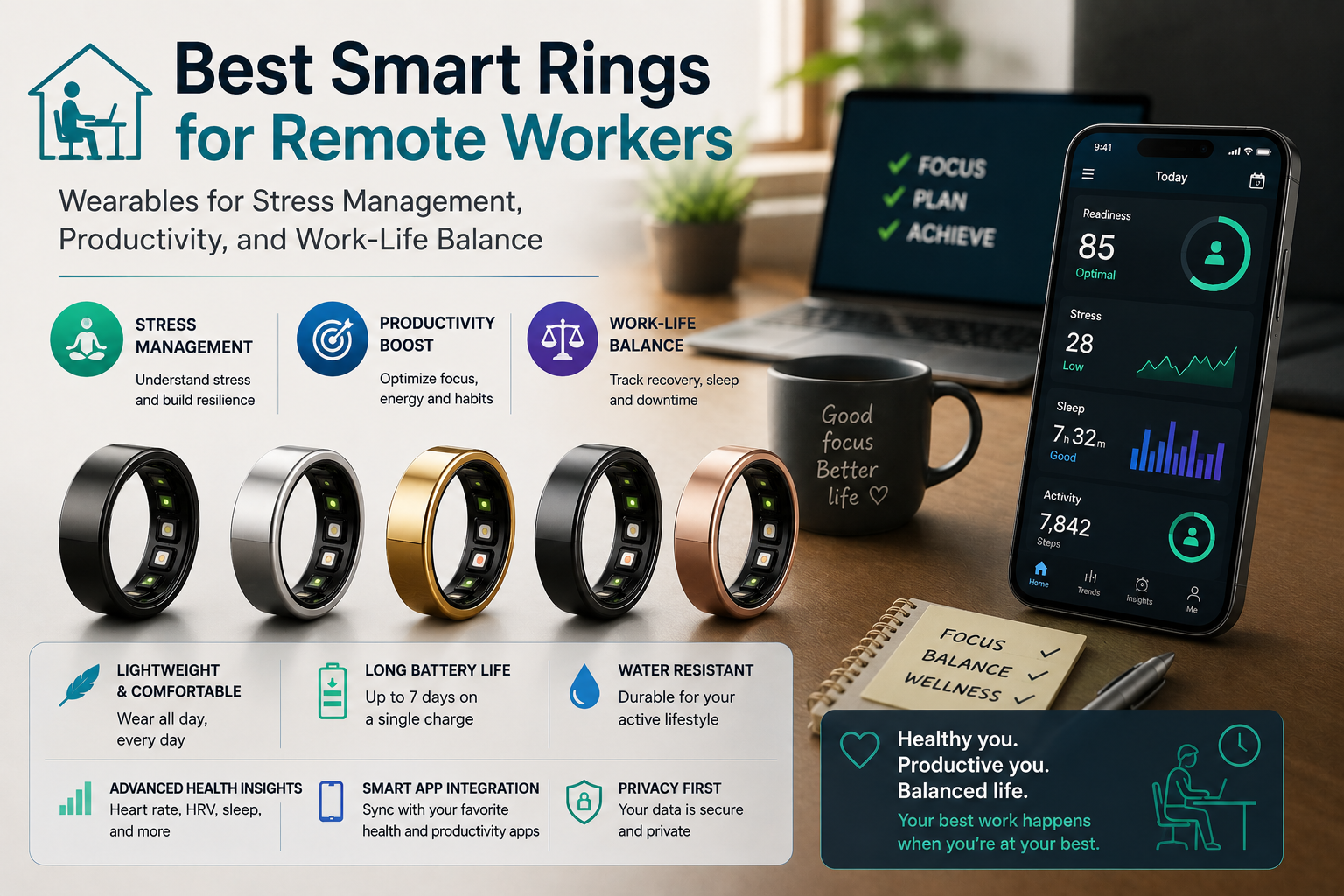
Professionals
Better sleep often leads to improved focus, productivity, and decision-making.
Athletes
Sleep plays a critical role in recovery and performance.
Students
Quality sleep supports learning, memory, and concentration.
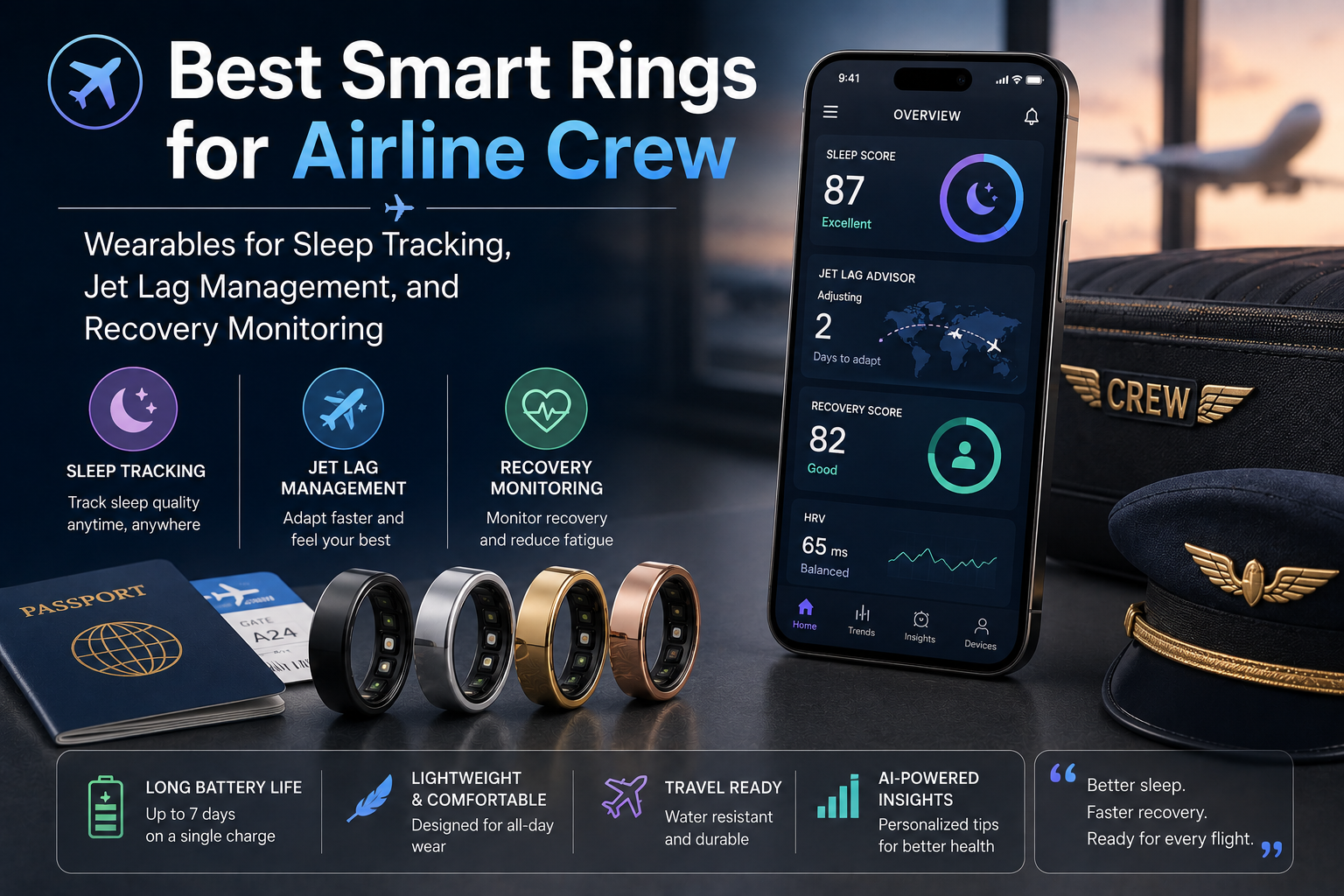
Frequent Travelers
Sleep tracking can help manage jet lag and disrupted schedules.
Health-Conscious Individuals
Anyone interested in optimizing wellness may benefit from sleep insights.
Limitations of AI Sleep Tracking
While AI Rings are impressive tools, they are not perfect.
Some limitations include:
- Sleep stage estimates are not medical-grade measurements
- Ring fit can affect accuracy
- Individual physiology varies
- Environmental factors may influence readings
AI Rings should be viewed as wellness tools rather than diagnostic medical devices.
The Future of AI Sleep Tracking
Sleep tracking technology continues to improve.
Future AI Rings may offer:
- More accurate sleep stage detection
- Advanced stress analysis
- Personalized sleep coaching
- Predictive wellness alerts
- Better recovery forecasting
- Enhanced health monitoring
As artificial intelligence becomes more sophisticated, AI Rings are likely to provide even deeper insights into sleep health and overall wellness.
Final Thoughts
AI Rings have become one of the most effective and comfortable ways to track sleep. By combining advanced sensors with artificial intelligence, these devices provide detailed insights into sleep duration, sleep stages, recovery, and overall wellness.
For individuals looking to understand their sleep better and build healthier habits, AI Rings offer far more than simple sleep tracking. They provide personalized guidance that can help improve recovery, energy levels, performance, and long-term health. As wearable technology continues to evolve, AI Rings are likely to play an increasingly important role in helping people achieve better sleep and better overall well-being.